The history
Las Vegas showgirl history: from El Rancho Vegas to the revue
How a Parisian music-hall figure became the signature of the Strip, drawn from Wikipedia's account of showgirls and early Las Vegas resorts.
Pick your revue date ↗Quick answer
Showgirls began in Parisian music halls in the late 1800s, reached the United States through the Ziegfeld Follies in 1907 and arrived on the Strip in 1941, when the El Rancho Vegas used dancers between acts. By the 1950s they were the main attraction. The old-style revues declined after the 1960s, and a modern show can only echo them.
A word that changed meaning
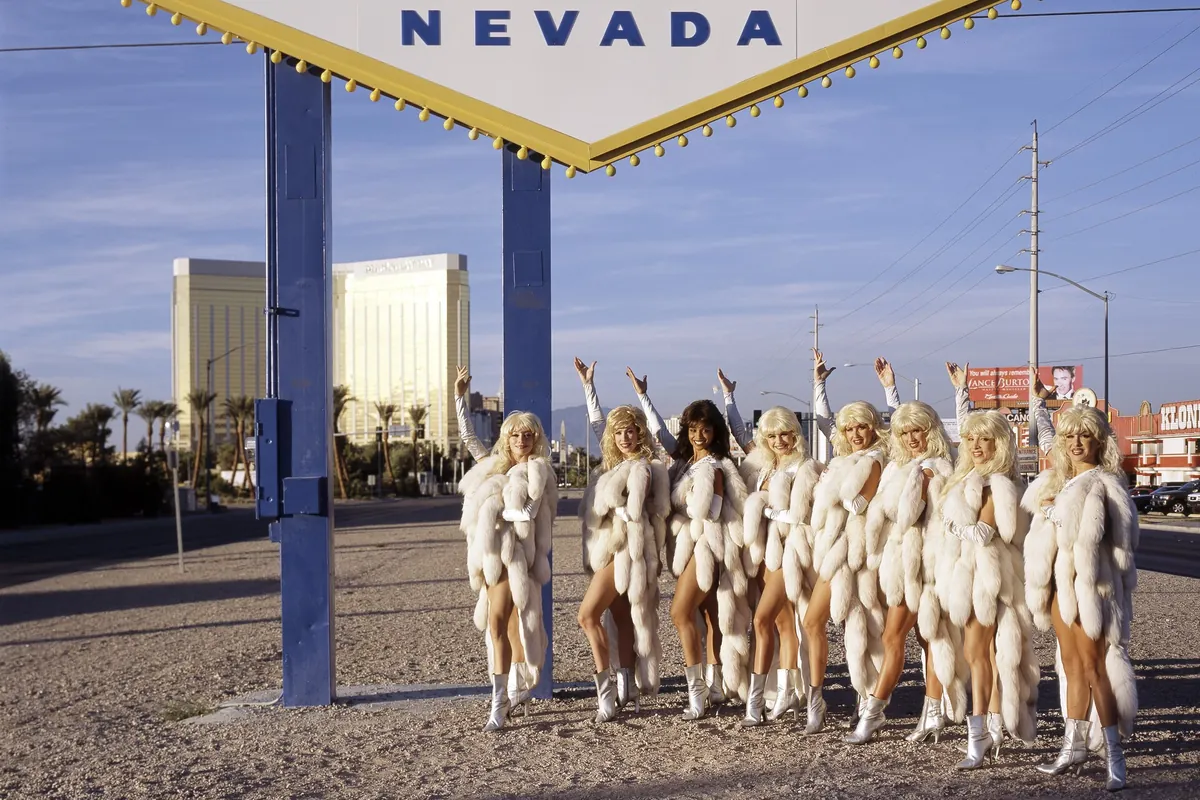
Wikipedia's showgirl article notes that eighteenth-century English usage meant a young woman who acted showily to draw male eyes, and that by the mid-nineteenth century the word had come to mean a singer and dancer in music-hall acts. The revue performer in an elaborate costume that we recognise today emerged in Paris, in the music halls and cabarets of the late 1800s. A revue built around showgirls is therefore older than Las Vegas by decades, and the Strip adopted a form that was already well established in Paris and on Broadway.
From Paris and Broadway to the desert
The article adds that Broadway's Ziegfeld Follies brought showgirls to American audiences in 1907, and that Busby Berkeley put them into his Hollywood films of the 1930s. The Bluebell Girls, a dance troupe created by the Irish dancer Margaret Kelly in 1932, worked at the Folies Bergere and Le Lido, and by the 1950s had permanent troupes in Paris and Las Vegas. By the time the first resorts rose along the highway south of town, then, the look had a recognised style, a training route and a business model.
The first dancing girls on the Strip
According to the Showgirl article, the first casino on the Las Vegas Strip to employ dancing girls as a diversion between acts was the El Rancho Vegas in 1941. The Las Vegas Strip article calls the El Rancho Vegas the first full-service casino resort on the boulevard, opened on 3 April 1941. The earliest dancers were an interlude, not the headline: they filled the gaps while the audience waited for the singer or comedian who had drawn the crowd.
When the chorus became the main event
The Sands brought a more lavish approach. Wikipedia says showgirls in expensive costumes were presented at the Sands in 1952 for a show with a headline entertainer, and that showgirls later moved from opening and closing the headliner's act to being the main attraction. Major productions of the late 1950s, the article lists, included a Paris-style revue at the Stardust, the Copa Girls at the Sands and a follies production at the Desert Inn. Competition between casinos pushed costumes and sets to greater extravagance.
Toplessness and long runs
The same source says the Desert Inn producer introduced topless showgirls and that the idea was then built into the Stardust revue, which ran for 31 years. It also reports that showgirls performed in every hotel and casino on the Strip during the 1950s and 1960s, and that the popularity of showgirl shows slowly declined after the 1960s, with all of the major shows of the old kind closed by the early twenty-first century. This guide makes no claim about what appears on the stage of any particular night.
What this means for a modern revue
A show that opens in a neon boneyard and walks through Strip eras is in effect a stage version of this history. Feathers and headdresses are shorthand for the 1950s and 1960s, brass bands for the same decades, and tributes to singers who headlined the showrooms for the rest. When the booking page promises showgirls and a live big-band orchestra, it is promising the two ingredients that most defined the classic Las Vegas revue. How faithfully a given production treats the tradition is a matter of taste, and visitors who know the history will enjoy spotting the references.
Where to read more
Wikipedia's Showgirl article is a short, readable overview, and the pages on the El Rancho Vegas, the Sands and the Stardust give the hotel side of the story. For the music behind the dancing, the guide to the Rat Pack, Elvis and Tom Jones covers the headliners, and the big-band entry explains the sound that accompanied them.
Read next: The Rat Pack, Elvis and Tom Jones: the Las Vegas eras behind the show
Frequently asked questions
When did showgirls first appear on the Strip?
Wikipedia says the El Rancho Vegas used dancing girls between acts in 1941.
Where did the form come from?
From Parisian music halls and cabarets in the late 1800s, then Broadway's Ziegfeld Follies in 1907.
Did the tradition last?
It faded after the 1960s, and the major old-style revues had closed by the early twenty-first century.
Sources