The signs
The Neon Boneyard: where retired Las Vegas signs end up
The real museum behind the revue's opening scene: how Las Vegas neon began, how the boneyard formed and why the signs are kept.
Pick your revue date ↗Quick answer
The Neon Boneyard is the outdoor yard of the Neon Museum at 770 North Las Vegas Boulevard, where retired casino and business signs are kept. Tours began in 2001 and the museum opened to the public on 27 October 2012. The revue opens in a boneyard of its own as a stage device; a ticket to the show does not include the museum.
What the boneyard is
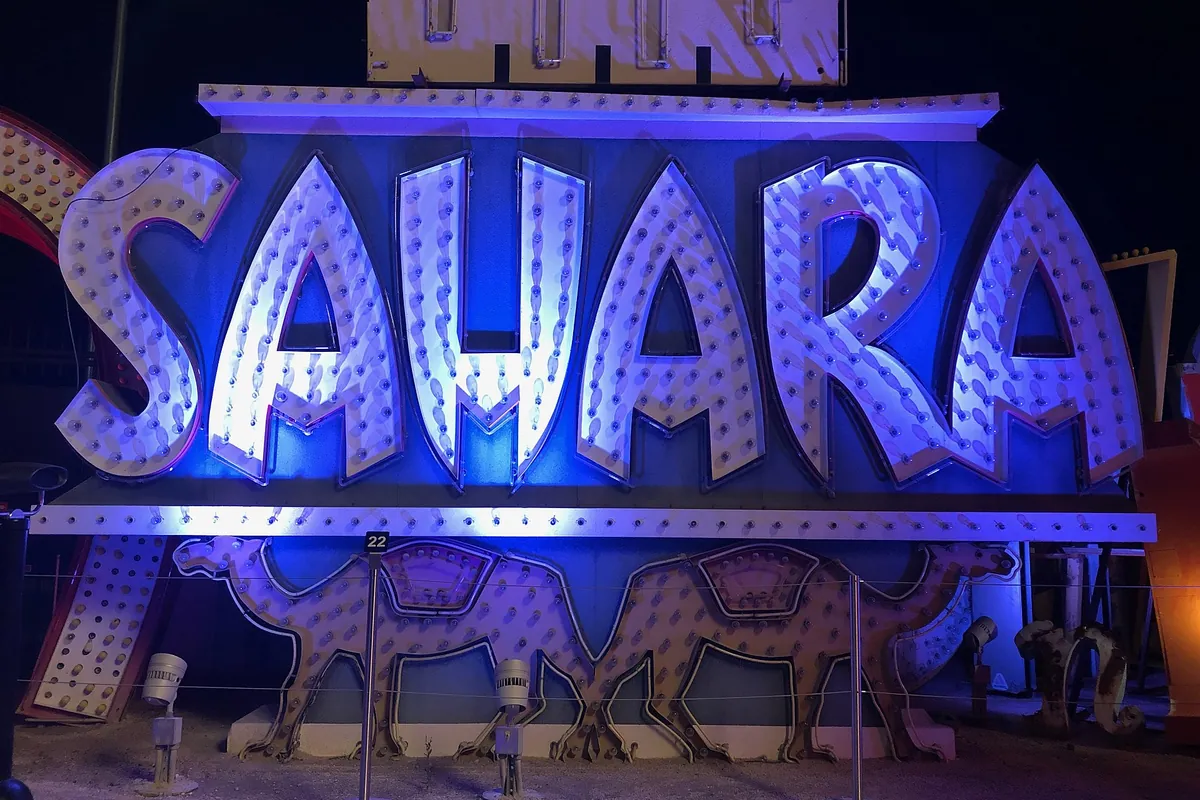
The Neon Museum in Las Vegas displays signs from old casinos and other businesses outdoors on 2.27 acres, according to Wikipedia. The main yard, called the Neon Boneyard, holds retired signs in the open air, many of them from hotel-casinos that have closed. The article says the collection includes more than 200 signs. The revue opens in a boneyard of its own, and this guide explains the real place behind that scene.
How neon came to the desert
The Wikipedia article says neon signage in Las Vegas dates to the 1920s and grew sharply in popularity, especially among hotel-casinos, during the 1930s. Many of the signs were made by the Young Electric Sign Company, and in the 1970s some locals campaigned to preserve old neon. When the Sands took down its original sign in 1981 as part of a renovation, calls for preservation grew louder.
A museum slowly takes shape
Efforts to start a neon museum began in the late 1980s and stalled for lack of resources. On 18 September 1996 the Las Vegas City Council voted funds for the project. The first scheme was to relight old signs around downtown, and the Horse and Rider sign from the Hacienda was relit on 13 November 1996 at Fremont Street. In 2000 the city granted a site near Cashman Field, and tours of the new yard began by appointment in 2001.
The shell-shaped lobby
The former La Concha Motel, on the Strip, gave the museum its shell-shaped lobby, which was cut into eight pieces and moved north in 2006. After conversion it became the visitor centre, and the museum opened to the general public on 27 October 2012, ending the appointment system. Wikipedia gives the museum's address as 770 North Las Vegas Boulevard, in the downtown district rather than on the Strip.
What this has to do with the show
The revue's opening scene, a neon boneyard where a caretaker character brings old signs back to life, is a piece of stagecraft. It does not claim to be a visit to the museum, and a ticket for the show does not admit you to it. The link is thematic: Las Vegas has a habit of retiring its landmarks, and both places treat the retired signs as memory. The show asks you to imagine them lighting up again.
Seeing the real place
The museum stands apart from the revue, with ticketing and opening hours of its own, so check its own site for tours. Wikipedia notes that the museum received 200,000 visitors in 2023 and that 30,000 people were turned away that year because tours were sold out, so planning ahead sensibly applies. Do not assume a visit can be squeezed in on the day. Visitors who have only one evening will probably find the revue and a drive along the Strip enough of a neon story.
Frequently asked questions
When did the museum open to the public?
On 27 October 2012, per Wikipedia. Tours of the boneyard had run by appointment since 2001.
Is the museum part of the show ticket?
No. The museum sells its own tickets separately.
How many signs does it hold?
Wikipedia says the collection includes more than 200 signs.
Sources